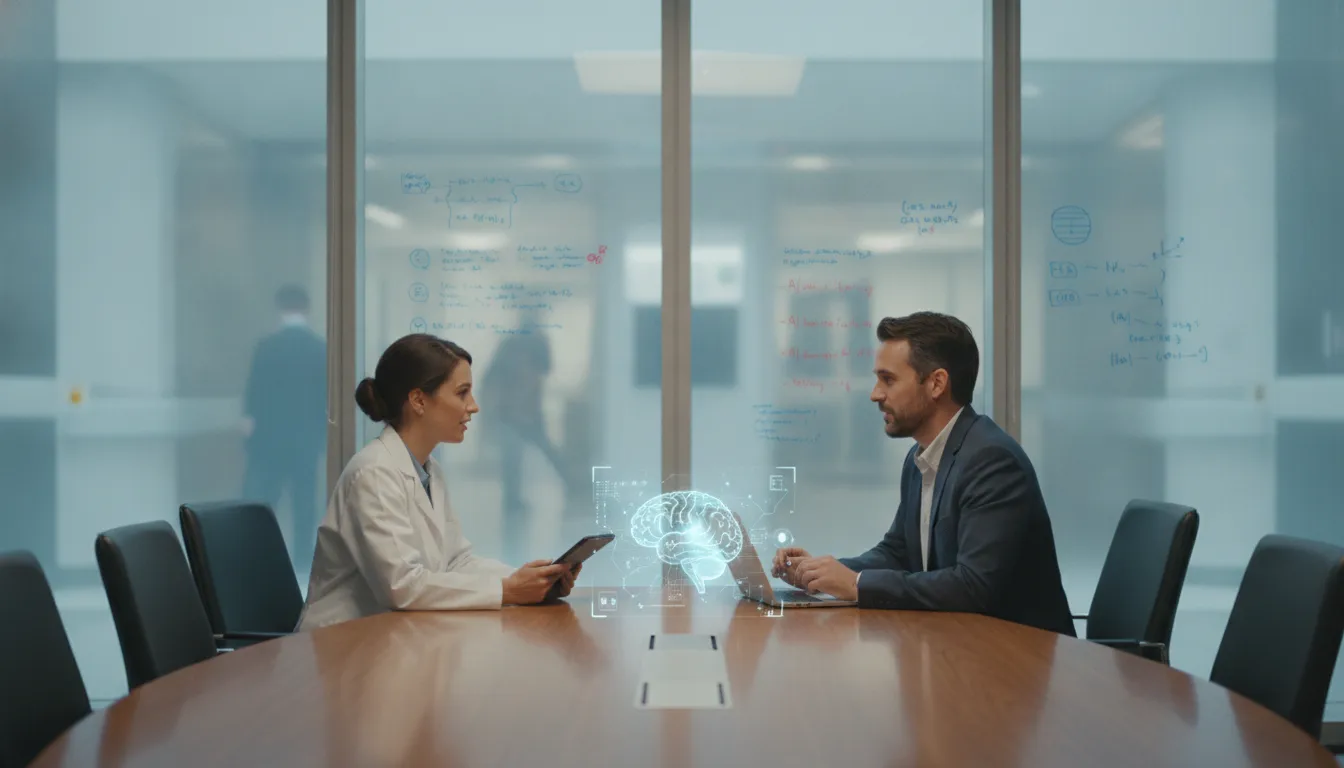
Summary: To find a technical co-founder for a clinical AI startup, identify candidates with a strong track record in applied AI and data engineering, clinical empathy, and adaptive problem-solving skills. Search in tech ecosystems like developer communities and health-tech hackathons. Evaluate candidates through trial projects to ensure they can translate clinical workflows into scalable, compliant software solutions.
Data shows that nearly 70% of healthcare startups encounter severe bottlenecks and struggle to scale due to unresolved technical challenges. For visionary founders stepping into the digital health space, bridging the gap between deep medical domain knowledge and sophisticated engineering is the single most defining test. When you build clinical artificial intelligence, clinical workflow knowledge alone cannot build fault-tolerant infrastructure or train models that doctors can trust during active care.
Understanding how to find a technical co-founder for a clinic ai startup determines whether an initial prototype ever reaches clinical trials or paying enterprise accounts. A technical co-founder or Chief Technology Officer translates clinical workflows into resilient data pipelines, navigates complex algorithm deployment, and guarantees that every technical iteration matches frontline clinical demands. Without technical leadership embedded in the founding team, startups bleed runway on outsourced software agencies, face devastating product delays, and ultimately fail to compete against agile health-tech incumbents.
Securing a world-class engineering leader requires a deliberate operational blueprint. You need to identify key competencies, systematically prospect candidate pipelines across tech ecosystems, thoroughly vet both technical ability and mutual work ethic, and structure an equitable, long-term working partnership built to withstand the high pressures of healthcare software deployment.
Key Takeaways
- Mission alignment dictates longevity: A shared commitment to clinical impact and commercial milestones ensures that co-founders survive intense product pivots, regulatory scrutiny, and extended healthcare sales cycles together.
- Multi-channel sourcing yields talent: Expanding discovery across developer communities, hackathons, academic research labs, and executive networks produces candidates with genuine clinical software interest.
- Hands-on evaluation minimizes hiring errors: Testing technical fluency through collaborative trial sprints and structured code reviews reveals genuine problem-solving capabilities far better than resume screens.
- Marketing governance safeguards early traction: Teams can utilize the Free Clinic Ad Compliance Checker to confirm their commercial messaging satisfies strict clinical advertising standards while recruiting high-caliber leadership.
Why is a Technical Co-Founder Important?
A technical co-founder is essential for a clinical AI startup because they design, build, and maintain the complex machine learning architectures and data pipelines that underpin your medical product. They translate frontline clinical workflows into reliable, scalable software requirements while ensuring algorithmic accuracy, clinical safety, and direct interoperability with electronic health record systems.
+-------------------------------------------------------------------+ | CORE TECHNICAL CO-FOUNDER RESPONSIBILITIES | +---------------------------------+---------------------------------+ | System Architecture & Scalability| Data Privacy & Health Compliance| | - Machine learning pipelines | - HIPAA, SOC 2, and HITECH audit| | - EHR/EMR bidirectional sync | - End-to-end data encryption | | - Low-latency clinical inference| - Secure role-based access | +---------------------------------+---------------------------------+ | Engineering Culture & Hiring | Technical Due Diligence | | - Technical screening & vetting | - Managing investor tech audits | | - Code review standards & CI/CD | - IP protection & data ownership| | - Sprint velocity management | - Cloud infrastructure spend | +---------------------------------+---------------------------------+
Beyond fundamental product development, technical co-founders carry the weight of healthcare regulatory compliance. Clinical applications handle sensitive protected health information that requires airtight security configurations, granular access controls, and strict adherence to privacy frameworks like HIPAA and SOC 2. A seasoned technical partner implements these controls into the foundation of your codebase from day one, preventing catastrophic compliance failures and costly refactoring later.
In addition to technical architecture, an engineering executive directly elevates your company's fundraising potential. Early-stage venture capital investors and healthcare angel syndicates look for balanced founding teams capable of executing on their technical roadmaps without total dependency on third-party contractors. Having a dedicated technical leader demonstrates that your venture can recruit top-tier software engineers, protect intellectual property, and scale compute infrastructure economically as user volume grows.
How to Identify the Right Co-Founder
Picking a technical co-founder for a clinical AI product is part engineering review, part personality test. You want someone who can build real systems, explain them to clinicians without drowning everyone in jargon, and stay interested when the work turns messy. That last part matters a lot.
Look for proof, not polish.
To judge fit, I’d use a simple screen:
- Applied AI and Data Engineering Track Record: Check whether they have actually shipped machine learning models, handled large datasets, and kept cloud systems secure.
- Clinical Empathy and Workflow Comprehension: Watch how they react when they start learning medical workflows, safety rules, and the small frustrations that make clinicians roll their eyes.
- Adaptive Problem-Solving: See what they do when an API breaks, data quality falls apart, or a prototype needs to change fast.
- Leadership and Talent Magnetism: Ask whether strong engineers, data scientists, and product people would actually want to work under them.
- Direct, Transparent Communication: Make sure they can talk about trade-offs, technical debt, and timelines in plain language.
Then pay attention to how they deal with uncertainty. Early clinical software changes shape all the time, usually because doctors, clinic managers, and practice staff keep finding better ways to describe the problem. A good technical partner doesn’t cling to a prototype just because it exists. They can throw it out. They can listen. They can keep going when the plan shifts again.
Where to Find Potential Co-Founders
You’ll find the right people where they already build things. That sounds obvious, because it is.
Look in developer communities, open-source repositories, university alumni groups, health-tech hackathons, research labs, and founder-matching tools. Search GitHub projects and Hugging Face spaces that deal with medical image processing, clinical note extraction, or patient prediction work. People who contribute to open-source health libraries often care about the problem and already have the technical depth to work on commercial clinical products.
The Y Combinator Co-Founder Matching platform is one place to start, if you filter for people who already care about healthcare software and AI. Biomedical informatics departments at universities are another. Doctoral students and postdocs there often want a commercial partner who can help carry research into the market. Keep reaching out over time. Good matches rarely show up on the first try.
Evaluating Technical Skills and Fit
If you're trying to find a technical co-founder or CTO for clinical AI products, resume polish won't tell you much. You need to see them work. A paid, time-boxed trial project is a better test, and a technical advisor can help you judge the architecture talk without getting lost in jargon.
+--------------------------------------------------------------------+ | 4-STAGE CANDIDATE VETTING PIPELINE | +--------------------------------------------------------------------+ | [Stage 1: Portfolio & Code Deep Dive] | | Review past GitHub commits, system designs, and model builds | +----------------------------------+---------------------------------+ | V +--------------------------------------------------------------------+ | [Stage 2: Technical Advisory Screen] | | A third-party CTO or advisor checks scalability, security, stack | +----------------------------------+---------------------------------+ | V +--------------------------------------------------------------------+ | [Stage 3: 2-4 Week Paid Trial Sprint] | | Build a working prototype or a test data pipeline together | +----------------------------------+---------------------------------+ | V +--------------------------------------------------------------------+ | [Stage 4: Reference & Culture Alignment] | | Call former engineering colleagues and check work habits | +--------------------------------------------------------------------+
During the trial sprint, watch the basics. How do they set up their workflow? Do they write documentation that someone else could follow next week? When something breaks, do they fix the root cause, or do they patch over it and move on? One bad shortcut can haunt a clinical product for months.
The moment of friction matters too. If your clinical feedback clashes with their software assumption, pay attention to the response. Calm pushback is fine. Dismissiveness is a warning sign.
Compatibility matters just as much as code quality.
Clinical AI teams get squeezed from both sides. Product deadlines pile up. Servers fail. Investors ask awkward questions. That pressure exposes how someone handles conflict, how they give feedback, and whether they stay useful when the room gets tense. Speak with former peers and managers, and ask plain questions about deadlines and stress.
Using Tools and Outside Help
You don't have to do the search alone. Candidate outreach, clinic feedback, and market checks can move faster with the right tools and outside specialists. The Free Patient Review Request Kit can help you review candidate communication, and Clinads can support acquisition and talent outreach work.
Shared workspaces help too. Set up project boards, product roadmaps, and documentation folders early, then watch how a candidate uses them. Clean organization shows up fast. So does chaos.
Clinical growth agencies and market research toolkits can also save time before any serious code gets written. If you can show documented demand, active waitlists from medical practices, and a clear regulatory path, the role becomes easier to sell to strong engineers who want to build something doctors will actually use.
How to Build the Partnership
A lasting founder relationship needs clear lines. Decide who owns clinical workflow, who owns the model and infrastructure work, who handles sales and investor conversations, and how disputes get settled. Put it in writing before you incorporate or sign contracts.
+--------------------------------------------------------------------+ | CO-FOUNDER OPERATIONAL DIVISION | +----------------------------------+---------------------------------+ | Non-Technical / Clinical Founder | Technical Co-Founder / CTO | +----------------------------------+---------------------------------+ | - Clinical workflow design | - Core algorithm & AI model dev | | - Regulatory & legal strategy | - Cloud infrastructure & DevOps | | - Practice sales & customer discovery| - EHR integration & interoperability| | - Fundraising & investor relations| - Engineering team recruitment | | - Marketing & clinic partnerships| - Data security & HIPAA posture | +----------------------------------+---------------------------------+
Use a founders' agreement with four-year vesting and a one-year cliff. That's the safety rail. If someone leaves early, the equity stays tied to real work. Set KPIs for both technical delivery and business progress so nobody drifts into vague promises.
Hold weekly retros. Talk about technical debt, clinical feedback, burn rate, and blockers. Say the hard things out loud. Trust grows when both sides can disagree without turning every meeting into a fistfight.
Conclusion
A clinical AI startup lives or dies on its technical side. If the product is going to touch real workflows, data rules, and messy hospital software, the wrong hire can slow everything down.
So the search for a technical co-founder or CTO deserves real attention. Look for proven engineering skill, a fit with your working style, trial sprints that show how someone actually operates, and places where health-tech talent already gathers.
A good technical partner does more than write code. They help with healthcare data compliance, they build software that fits into clinical routines, and they keep the company from tripping over its own systems as it grows.
Frequently Asked Questions
How do I start looking for a technical co-founder?
Start with a plain document. Write down the product, the users, and the technical shape of the system before you start asking around.
Then go where technical people already spend time. GitHub helps, hackathons help, university informatics programs help, and founder matching databases can surface people you would never meet through your own circle. Mutual connections matter too. So do active health-tech communities.
What qualities should I look for in a technical co-founder?
You want someone who can build software well and who understands machine learning without getting lost in theory. Clinical workflows matter here, and so does the ability to listen.
Communication counts. So does resilience when the schedule slips and the product gets hard. The best technical co-founder can turn a product idea into secure, maintainable code that meets healthcare standards without turning every meeting into a lecture.
How can I ensure a good working relationship with my co-founder?
Talk about roles early. Talk about equity early. Talk about vesting early. That conversation is awkward for about ten minutes, and then it saves you months of confusion.
Set a weekly check-in and use it for real problems, not performance theater. If you can put the agreement in writing with a clear way to handle conflict, do it. Trust gets easier when the rules are visible.
What if I can't find a co-founder with the right skills?
If the search drags on, bring in a fractional CTO or a technical advisory board. That can keep the product moving while you recruit.
You can also work with specialized health-tech agencies like Clinads while you build internal talent through targeted hiring and technical contracting. It’s a slower path than finding the perfect co-founder on day one, but it keeps the work alive.
How important is it to have a co-founder with healthcare experience?
Healthcare experience helps a lot. It shortens the learning curve around HIPAA, clinical workflows, and EHR integrations. According to Dr. Marie Andersson's guide, understanding the nuances of healthcare systems can significantly enhance the integration process (Dr. Marie Andersson, 2023).
Still, a strong systems engineer can learn the domain quickly if they’re curious and humble. Pair that person with a founder who knows the clinical side well, and the team can cover ground fast.
For those in West Virginia, finding a specialized Diabetes Dietitian can also be crucial for startups focusing on diabetes management solutions (Diabetes Digital, 2023).
Related reading
- Private Healthcare Clinic Business Practices and Patient Protection: What You Need to Know
- How Healthcare System Culture Shapes Patient Safety: What Patients and Clinics Need to Know
- How Healthcare Practices Overcome Slow Patient Growth and Build Sustainable User Bases
- Healthcare Market Research & Validation for AI in Primary Care Practices
Sources
- Clinads
- Find a Diabetes Dietitian in West Virginia
- Getting Started
- Pediatric Urgent Care in Anaheim | Walk-In Clinic
- Florida Atlantic Medical Group - Primary Care
- Optum Ear, Nose and Throat (Otolaryngology) - Glen Cove, NY
- Weight Loss Center in St. Augustine | Crescent Beach Care
- Plattsburgh Family Health: Quality Primary Care ...
- Cancer Institute
- Mount Carmel Heart & Vascular Specialists Hilliard
- Christopher Y. Maeda, MD | Bothell, WA - Providence
- Heart Center Doctors in Bradenton | HCA Florida Blake Hospital
- Find occupational health in Midland, MI
- heyclincy.com
- Non-tech founders without a tech co-founder or CTO, how did you ...