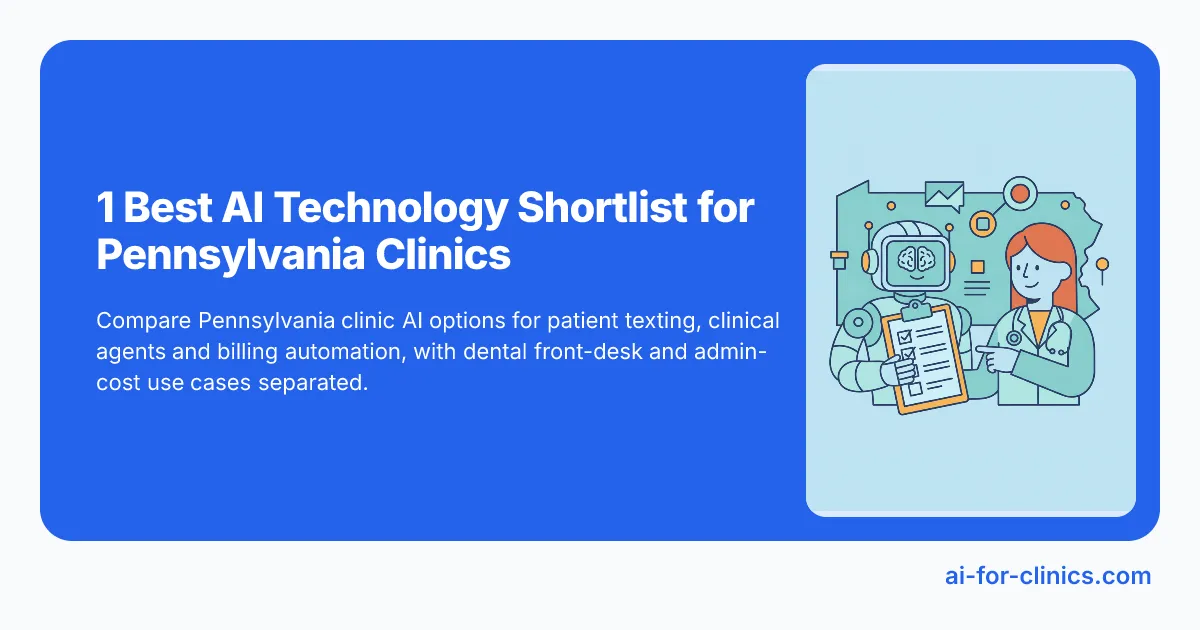
Summary: The best AI technology for healthcare clinics in Pennsylvania depends on the specific workflow challenges faced by the clinic. Key options include Penn Medicine for patient texting with medical devices, K Health for AI clinical agents, Doximity for system-wide clinical AI suites, Resonate for AI dental receptionists, ThoroughCare for administrative cost reduction, and ASP-RCM Solutions for medical billing automation. Clinics should match their operational problems to these specific AI solutions.
A practice manager in Pennsylvania who sits through vendor pitches is staring at hundreds of digital health products, and most of them never say which operational fire they actually put out. The best AI technology for healthcare clinics in Pennsylvania is found by naming one clinic bottleneck, not by collecting broad software claims. Procurement groups lose months to generic demos when they treat artificial intelligence as one giant category. The gains show up when leaders match a local delay to a vendor built for that job. That might be automated billing, clinical agent triage, dental front-office coverage, administrative task reduction, or device-linked messaging.
Pennsylvania providers sort the field fastest by grouping tools by what they really do: Penn Medicine for device texting, K Health for clinical triage agents, Doximity for health system platforms, Resonate for dental reception, ThoroughCare for administrative overhead, and ASP-RCM Solutions for revenue cycle tasks.
1. Penn Medicine: patient texting with devices
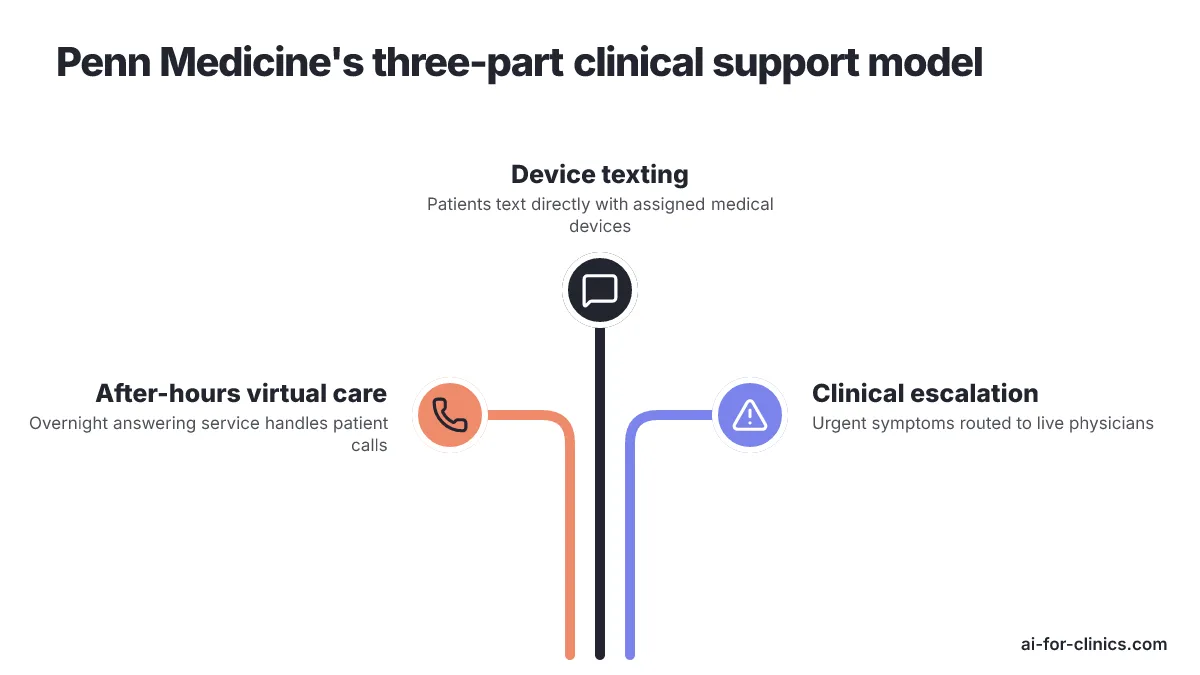
Remote monitors and connected medical hardware create a steady message load that standard patient portals do not clear away. The Penn Medicine AI platform deals with that friction by letting patients text directly with their assigned medical device. Outpatient facilities running remote patient monitoring programs get the clearest use from it, because the system centers on live device interaction rather than appointment promotion or billing questions. Virtual care networks in Pennsylvania also have to deal with physician fatigue from overnight inbox messages and phone triage. In January 2026, The Daily Pennsylvanian reported that Penn Medicine OnDemand expanded after-hours virtual care across its primary care network to handle patient phone calls through the night, which kept doctors off mandatory after-hours response duty. Clinic executives reviewing access software should ask whether device texting, overnight answering services, and urgent clinical escalations sit under separate contracts or work inside one clinical protocol.
2. K Health: AI clinical agents for rollout decisions
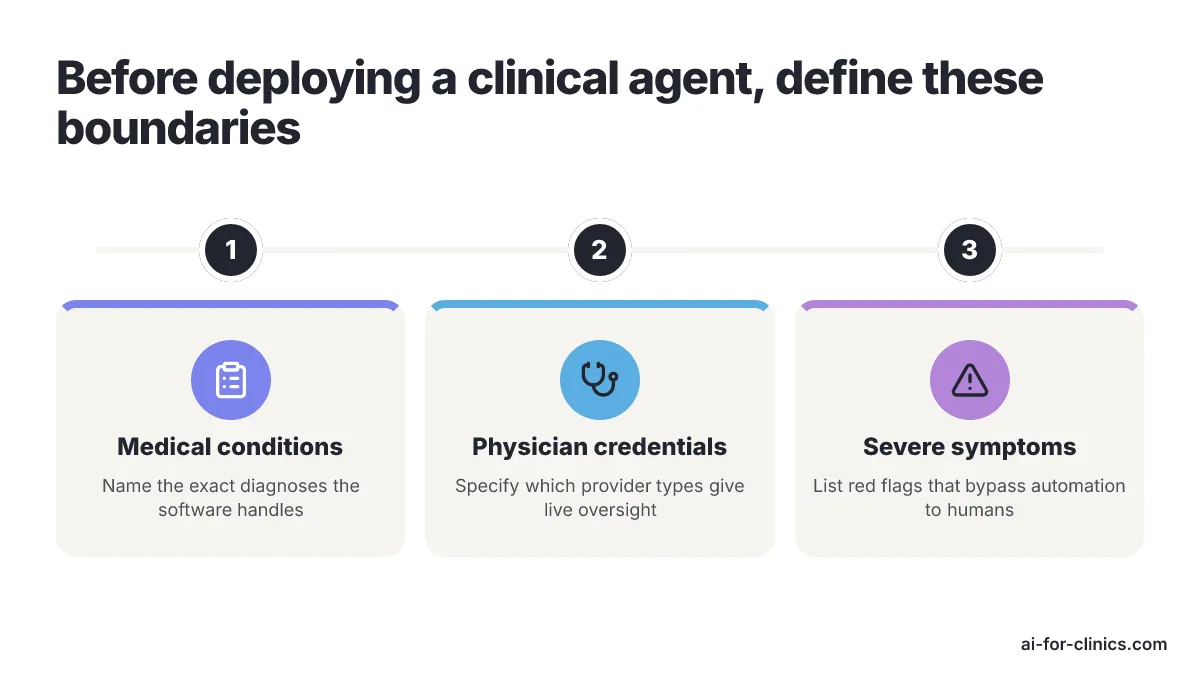
Diagnostic intake and symptom review need direct clinical supervision. They do not belong to chatbots that merely point visitors toward office hours. Penn Medicine selected K Health to deploy AI clinical agents across patient intake pathways, which gives clinical leaders a model for judging autonomous triage tools. Clinical directors looking at that setup should study how automated handoffs fit into provider schedules without piling on unpaid documentation hours. Healthcare executives and venture investors who review clinical agents need written protocol boundaries before they approve a trial. The main diligence questions have to spell out the exact medical conditions the software handles, the physician credentials needed for live oversight, and the severe symptoms that send a patient to human clinicians right away. Practices that cannot name the clinical step they want automated should stay away from clinical agent platforms, because staff will burn time arguing about model algorithms instead of clearing patient wait times.
3. Doximity: system-wide clinical AI suites
Regional hospital networks run into heavy integration friction when each clinic buys a separate tool for documentation, messaging, or scheduling. Penn Highlands Healthcare responded to that departmental split by partnering with Doximity to deploy a system-wide clinical AI suite across its operational network. Health systems that want an enterprise-wide clinical software footprint are the main audience for that setup, unlike standalone practices that need a focused billing or intake tool.
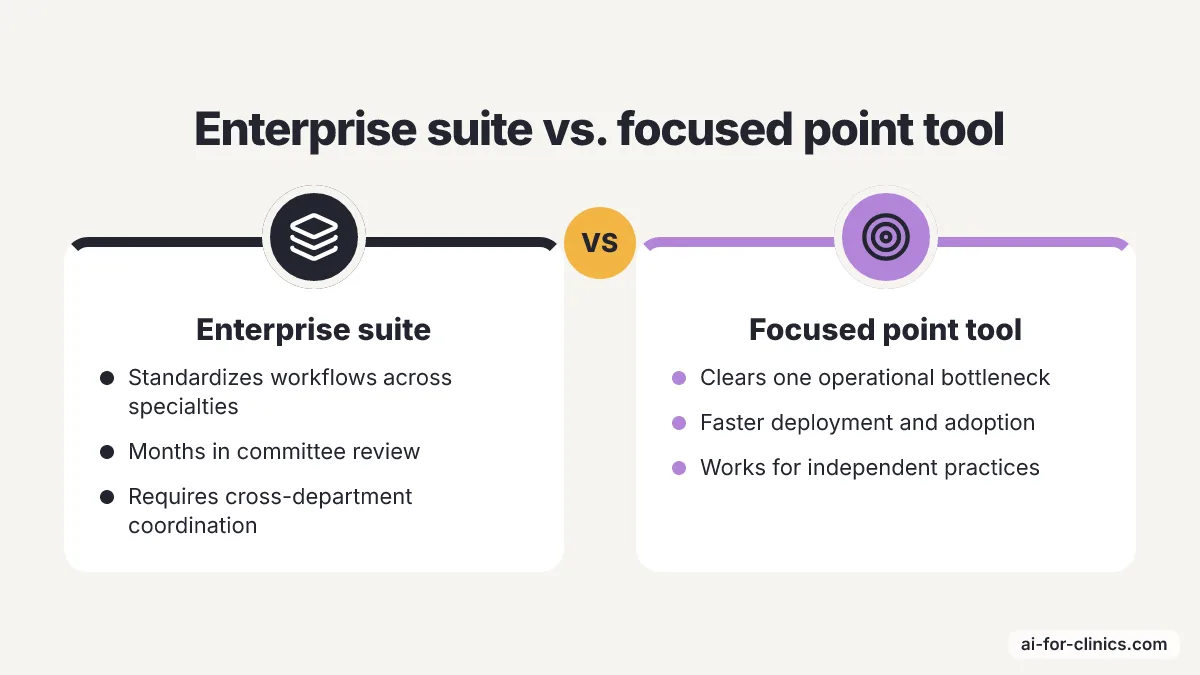
Enterprise-wide rollouts work or fail based on how well providers follow the workflow across different specialties. Health system leaders need to decide which departments start first, which documentation tasks the software takes over, and how much daily adjustment the physicians will need if the rollout is going to work. Independent medical offices with one clear operational bottleneck should pass on sprawling suite contracts, since a focused point tool delivers workflow relief faster than an enterprise package that can sit in committee review for months.
4. Resonate: AI dental receptionist evaluation
When the morning phone starts dumping calls into voicemail, dental offices lose hygiene visits and restorative work. Resonate sells a dental receptionist system to Pennsylvania practices and group networks that are stuck with jammed front-desk queues in 2026. Practice managers use it to answer evening calls, collect new patient registrations, and place routine booking slots into their scheduling software.
Voice automation only works when it fits the people already behind the counter. Office managers need to see how the software separates a broken tooth from a routine prophylaxis, how evening messages arrive inside existing patient charts, and what sends a call straight to human staff. If an office already handles most of its incoming calls effectively, front-desk voice automation may not be a necessary investment. That money does more for hiring clinicians, negotiating bulk supply rates, or bringing in operational training.
5. ThoroughCare: administrative cost reduction
Primary care margins get squeezed when staff spend half their shift on non-billable coordination, care management notes, and charting. The Assistant Secretary for Technology Policy reported in 2023 that ThoroughCare sells back-office software to help Pittsburgh hospitals and outpatient centers cut daily administrative overhead. It works behind the scenes instead of talking to patients on the phone. Operations directors buy it to clear administrative jams in the back room. Outside large hospital networks, administrators should ask for numbers from clinics of their own size before signing long contracts, because those time savings look different in a facility with small panels and only two desks. If the current team finishes charting during normal clinic hours and daily file volumes stay low, manual records cost less than an ongoing subscription.
6. ASP-RCM Solutions: medical billing automation
Outpatient cash flow drops fast when payers reject claims and front-desk workers spend their afternoons chasing unpaid balances. ASP-RCM Solutions sells medical billing and collections tools for independent medical practices in Pennsylvania, aiming software at manual scrubbing steps, code mismatches, and status inquiries with insurance plans. Handing those tasks to an automated system keeps staff on patient check-ins instead of billing calls.
Billing software needs clear rules for every rejection. The American Medical Association's 2026 report highlights that finance managers have to map which submissions go through cleanly, which payer codes need a person, and how disputed items get back to certified coders. For an outpatient practice that already experiences timely acceptance of most first-pass claims, additional billing automation may not significantly impact operations. Auditing current collection rates comes first, before anyone signs off on a contract.
How should a Pennsylvania clinic choose among these AI options?
The choice starts inside the clinic, with the delay that shows up again and again. Leave vendor promises for later. Phone coverage at the front desk, automated intake, and claims follow-up are separate problems, and one product type will not cover all of them. Clinic leaders get a better shortlist when they match each software option to the staff member who actually owns that problem.
A plain description of the bottleneck helps before any sales call begins. An outpatient primary care director may say overnight calls keep pulling off-duty physicians back into triage work. A dental practice manager may see front-desk staff miss incoming calls while they are already scheduling patients in person. A revenue cycle director may point to denied claims sitting for weeks before anyone looks at the rejection codes.
Every vendor on the list has to fit that exact definition. Penn Medicine gives an operating blueprint for device-linked text messaging and after-hours virtual clinical support. K Health fits health systems that want supervised clinical agents for patient assessment. Doximity serves enterprise medical systems that want to standardize clinical software tools across hospital networks. Resonate targets dental clinics and dental support organizations dealing with unanswered front-desk phone volume. ThoroughCare fits administrative cost-reduction programs across Pittsburgh medical facilities. ASP-RCM Solutions serves independent medical clinics that are trying to clear revenue cycle delays and billing rejections.
Evidence requests need to match the size of the clinic, the patient mix, and the staffing setup. An independent outpatient clinic should ask for adoption figures and time savings from single-site facilities, not big university hospitals. A regional dental support organization needs proof that an automated receptionist can handle different location hours and provider specialties without manual rework. A billing coordinator should look at the exact dashboard where billing exceptions show up, then check that staff are not wasting time jumping between duplicate software systems. Software research platforms help when a clinic is building an initial list of vendors. AI for Clinics is Clinsight's directory of U.S. Healthcare startups, with founder backgrounds, funding milestones, and product descriptions that can be filtered by state location and clinical vertical. Healthcare founders use the database to review competitors, venture investors watch funding stages, and clinic executives use it as a first research directory before they talk with sales representatives.
Dental practices looking at front-office automation often need more than an answering service. The DDS Collective dentistry ecosystem gives a platform built for dental practices, linking clinics with the personnel, digital tools, and operational strategies they need to grow through an advanced group purchasing organization, clinical staffing services, startup advisory roles, and venture investments for dental entrepreneurs. Practice owners comparing Resonate have to decide whether their bottleneck calls for receptionist automation alone or a broader business setup that ties together clinical hiring, equipment purchasing discounts, and operational consulting.
Healthcare clinics that need third-party verified clinical outcomes should treat public product announcements as discovery material only. Procurement teams need formal diligence questionnaires that spell out integration timelines, data security protocols, staffing handoffs, and case studies from similar practices.
Long-term use depends on what stays under human supervision before automation enters the workflow. Successful clinic operators decide ahead of time that certified coders will audit complex insurance rejections, licensed physicians will make diagnostic conclusions, and front-desk personnel will handle difficult patient inquiries. That boundary should be set before vendor presentations start, because otherwise a clinic can end up bending a working workflow around software features.
Conclusion
Pinpoint the single administrative or clinical backlog currently draining staff hours: unresolved claim appeals, unanswered phone lines during clinical procedures, off-hours provider triage, or repetitive charting tasks. Summarize that bottleneck in one clear operational statement, designate a single clinic staff member to oversee the project, and contact only the software providers whose public case studies match that exact job.
Forming an initial vendor shortlist requires dedicated administrative hours, firm workflow boundaries, and the organizational restraint to decline product demonstrations that address unrelated operational issues. The guidance outlined here ends once the targeted vendor shortlist is established. Practice administrators must still complete technical security reviews, execute business associate agreements, organize staff training schedules, and establish clinical oversight rules before deploying any software tool across patient care workflows.
Frequently Asked Questions
What is the best AI technology for patient texting with medical devices in Pennsylvania clinics?
Penn Medicine offers an AI platform that allows patients to text directly with their assigned medical devices, which is particularly useful for outpatient facilities running remote patient monitoring programs. This system focuses on live device interaction, helping to manage the message load from remote monitors and connected medical hardware.
Which AI solution is recommended for clinical triage in Pennsylvania healthcare clinics?
K Health is recommended for deploying AI clinical agents across patient intake pathways. It provides a model for autonomous triage tools, helping clinical leaders manage diagnostic intake and symptom review under direct clinical supervision, ensuring that severe symptoms are escalated to human clinicians promptly.
What AI technology can help Pennsylvania hospital networks integrate clinical software across departments?
Doximity offers a system-wide clinical AI suite that helps regional hospital networks integrate documentation, messaging, and scheduling tools. This solution is ideal for health systems that want an enterprise-wide clinical software footprint, reducing integration friction across different specialties.
How can Pennsylvania dental clinics manage high call volumes with AI technology?
Resonate provides an AI dental receptionist system that helps manage high call volumes by answering evening calls, collecting new patient registrations, and placing routine booking slots into scheduling software. This solution is designed for dental practices with jammed front-desk queues, ensuring calls are handled efficiently.
What AI solution can reduce administrative costs in Pennsylvania healthcare facilities?
ThoroughCare offers back-office software designed to reduce administrative overhead in Pittsburgh hospitals and outpatient centers. It helps clear administrative jams by automating non-billable coordination, care management notes, and charting, allowing staff to focus on more critical tasks.
Related reading
- 7 Best AI Marketing Tools for Med Spas in 2026
- AI SEO Services for Med Spas: The 393% Traffic Shift That Rewrites Patient Acquisition