Summary: Vertical AI startups in the U.S. are transforming workflows for dentists and lawyers by focusing on specific professional needs rather than broad automation. Notable companies include Archy and Oryx for dental practice management, Overjet for dental AI across groups, Smith.ai for law-firm intake, and Trust AI for future dental operating systems. These startups address time-consuming tasks, offering tailored solutions for their respective fields.
A solo practitioner finishes the final patient record forty minutes after the clinic doors close, staring at unbilled procedures and three missed voicemails from prospective clients. Selecting vertical AI for dentists, lawyers, and clinics from a growing wave of US startup vendors requires separating actual operational relief from inflated product demonstrations. General-purpose assistants often collapse when confronted with specialized clinical charting, complex insurance coding, or strict legal intake requirements.
The sensible evaluation filter focuses on workflow depth before cataloging feature checklists. Any US startup targeting dental practices, medical clinics, or legal firms must justify its presence by taking over a single time-draining task that currently burns staff hours. When an office needs software to handle real clinical volume, horizontal tools create more manual reconciliation than they eliminate.
Different practices carry fundamentally different administrative burdens that software alone cannot always resolve. Some teams require deep practice management architecture, others need targeted diagnostic assistance, and legal operations demand specialized caller screening. When a clinician seeks business guidance rather than software, DentMent dental mentorship provides hands-on practice management instruction, doctor-to-doctor coaching, and a professional peer network.
1. Archy: best for cloud dental practice management
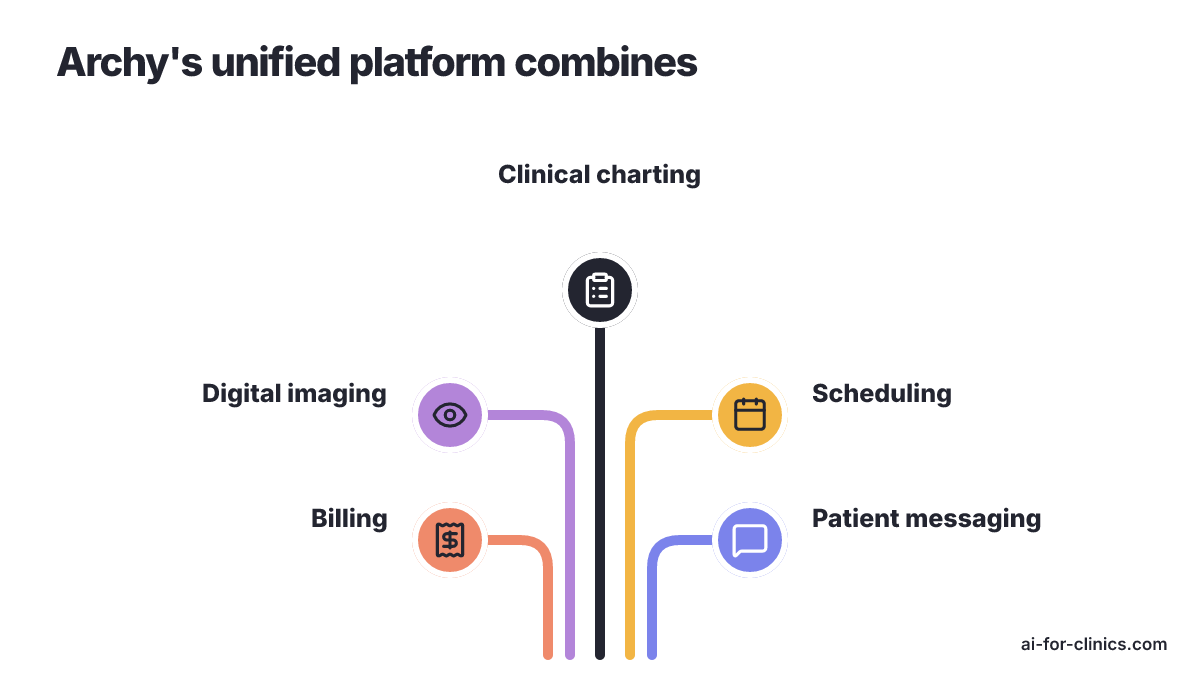
Headquartered in San Jose, Archy dental practice software unites clinical charting, digital imaging, scheduling, billing, and patient messaging inside a single native cloud environment. Practice owners who want their daily operating system and their automation tools housed under one roof gain the most from this consolidated architecture. Choosing a unified platform eliminates the friction of synchronizing separate vendor subscriptions across every treatment room.
Documentation support forms the center of the platform's automation capabilities rather than superficial front-desk answering scripts. The software includes Archy Scribe, an automated transcription feature designed to generate clinical notes during chairside exams, capturing treatment specifics before billing discrepancies can arise. Keeping documentation accurate at the moment of care prevents downstream payment delays and missing chart records.
Practices seeking only a light point solution for automated appointment reminders will find this full conversion excessive. Transitioning to the system demands a full practice-management migration that involves legacy data transfer, clinical team retraining, digital imaging integration, and restructured billing workflows.
2. Overjet: best for dental groups and payer-facing AI
Operating out of Boston, Overjet dental AI company positions itself as a market leader in dental artificial intelligence, serving dental support organizations, group practices, insurance carriers, and health plans. Multi-location operators benefit most when deploying this technology, as it standardizes clinical reviews, assists diagnostic consistency across associate dentists, and simplifies payer claim audits across large patient populations.
Academic pedigree forms the foundation of the company's enterprise credibility. Founded in 2018 by MIT computer scientists and Harvard dentists working out of the Harvard Innovation Labs, the company built its algorithms specifically to analyze dental radiographs and periodontal measurements against objective diagnostic standards. Clinical evaluators can assess verifiable dental data models rather than untested machine-learning experiments.
Solo operators looking for a simple front-desk answering tool should look elsewhere, as the architecture targets multi-provider infrastructure. Large practices and dental plans evaluating the software need to examine integration boundaries, model validation standards, staff training requirements, and existing clinical review protocols before purchasing.
3. Smith.ai: best for law-firm intake coverage
Based in Los Altos, Smith.ai intake agents delivers combined artificial intelligence and human receptionist coverage customized to match the screening protocols of individual legal practices. Law offices experiencing dropped calls, delayed lead qualification, or missed revenue opportunities gain an immediate safety net for new client acquisition.
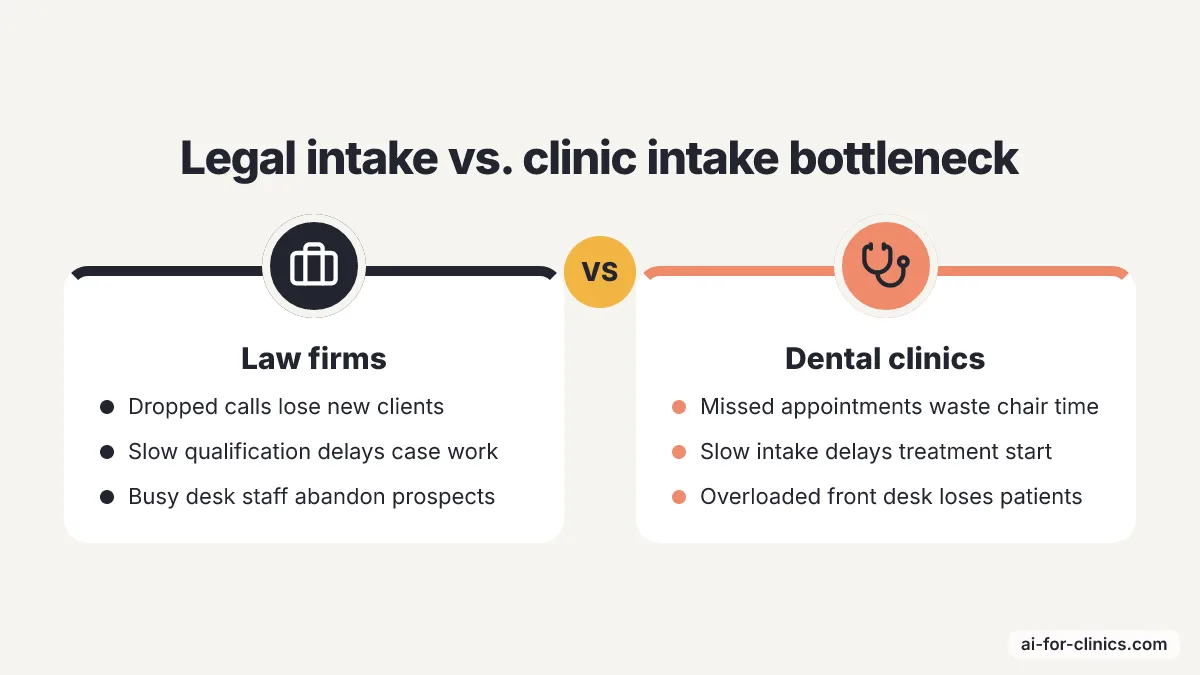
Lead conversion relies on structured caller qualification rather than generic answering services. The platform runs continuous client intake, gathers case facts, qualifies leads around the clock, and maintains integrations across major legal practice management software, and, according to Smith.ai, serves more than 5,000 law firms. Fast response times directly dictate matter acquisition rates in competitive legal specialties.
Clinic operators and healthcare founders can extract useful operational lessons from legal intake workflows. Both sectors experience severe revenue loss when high-intent prospects contact an office, encounter busy desk personnel, and abandon the intake process before speaking with a licensed professional.
4. Oryx: best for startup dental practices from day one
Built for brand-new offices, Oryx startup dental software puts cloud charting, insurance claims, imaging, and day-to-day practice work into one package. New dental founders who do not want to stitch together separate programs get a working base before the first patients arrive.
The automation lives inside the main clinical software, rather than showing up as add-ons from other vendors. The startup package includes AI Transcribe for voice notes, AI Exam Charting for periodontal records, and AI Imaging for diagnostic help, so new clinics can build steady chairside habits during the first week. Starting that way can keep admin slowdowns from piling up as the patient list grows.
This setup asks for a serious early commitment to how the office runs. Picking the software is an infrastructure decision, not a small add-on choice, so clinic founders need to weigh rollout timing, staff training time, patient data ownership terms, and the first year of workflows.
5. Trust AI: best for venture-backed dental operating-system ambition
Founded in San Francisco in 2025, Trust AI dental operating system says its goal is to build a full operating environment for modern dental care. Venture investors, DSO executives, and larger dental groups watching the move from separate automated tools to linked operating setups keep a close eye on the company.
The money behind it shows how much the industry likes full-platform rebuilds. The startup said it raised a $6 million round, and company statements called it the biggest seed round ever for a dental software company. That kind of early funding points to fast product work centered on clinical efficiency.
Offices that want a proven management system ready to use should remember that big platform plans take time. Practice owners have to weigh long-range operating system claims against what the office needs right now, and the tool they buy should solve a live clinical bottleneck today.
How should buyers choose among vertical AI startups?
Buyers should choose a vertical AI startup by matching it to the one workflow that breaks first in their office, then checking whether the product replaces the system of record or sits on top of it.
Procurement works best when it starts with the first thing that breaks after the schedule gets busy. In a dental office, that pain often shows up in chart notes, x-ray reads, insurance checks, and billing cleanup. Law firms lose billable time in intake calls when the wrong prospects get through.
Buyers should know what job a product actually does before they sign anything. Is it the main database, a layer in front, or an assistant sitting beside the clinician? Archy and Oryx sell full cloud systems for dental practices. Overjet handles x-ray diagnostics for groups and insurance carriers. Smith.ai screens calls for attorneys, and Trust AI tries to replace older practice software with newer infrastructure.
AI for Clinics is Clinsight's directory of U.S. Healthcare startups, built for market intelligence across clinical AI companies. Founders and investors use it to review a startup's vertical focus, funding stage, leadership background, and market category before they sit through a sales pitch.
| Startup | Primary vertical | Best-fit buyer | Workflow to inspect first |
|---|---|---|---|
| Archy | Dental practices | Dental offices wanting one cloud platform | Clinical notes, scheduling, billing, imaging |
| Overjet | Dental AI | DSOs, dental groups, insurers, health plans | Clinical AI deployment and payer-adjacent review |
| Smith.ai | Law firms | Legal practices needing intake coverage | Caller qualification and handoff to the firm |
| Oryx | Startup dental practices | New dental offices building from day one | Clinical care, insurance, imaging, operations |
| Trust AI | Dentistry | Investors and early adopters tracking dental operating systems | Product maturity against operating-system ambition |
Capital moves in adjacent service markets tell you where institutional money thinks automated work will stick. During September 2026, PYMNTS reported that Harvey raised $550 million at a $15.5 billion valuation, while Legora announced in October 2026 an equivalent Series E funding round of $550 million at an $8.8 billion post-money valuation.
Those legal investments give clinic leaders a useful clue because high-liability professional practices run into the same kind of operational mess. Both groups will pay for software that cuts clerical bloat and keeps documentation mistakes from turning into legal or regulatory trouble. Founders who want something durable need to aim at an administrative pain point so annoying that the office rearranges its day around the software just to be done with it.
Dental automation companies are still pulling in serious money at early and middle stages. In June 2026, Upstarts Media reported that Lassie raised $35 million in Series A funding led by Andreessen Horowitz to remove routine administrative burdens in dental offices, reaching an estimated valuation near $250 million.
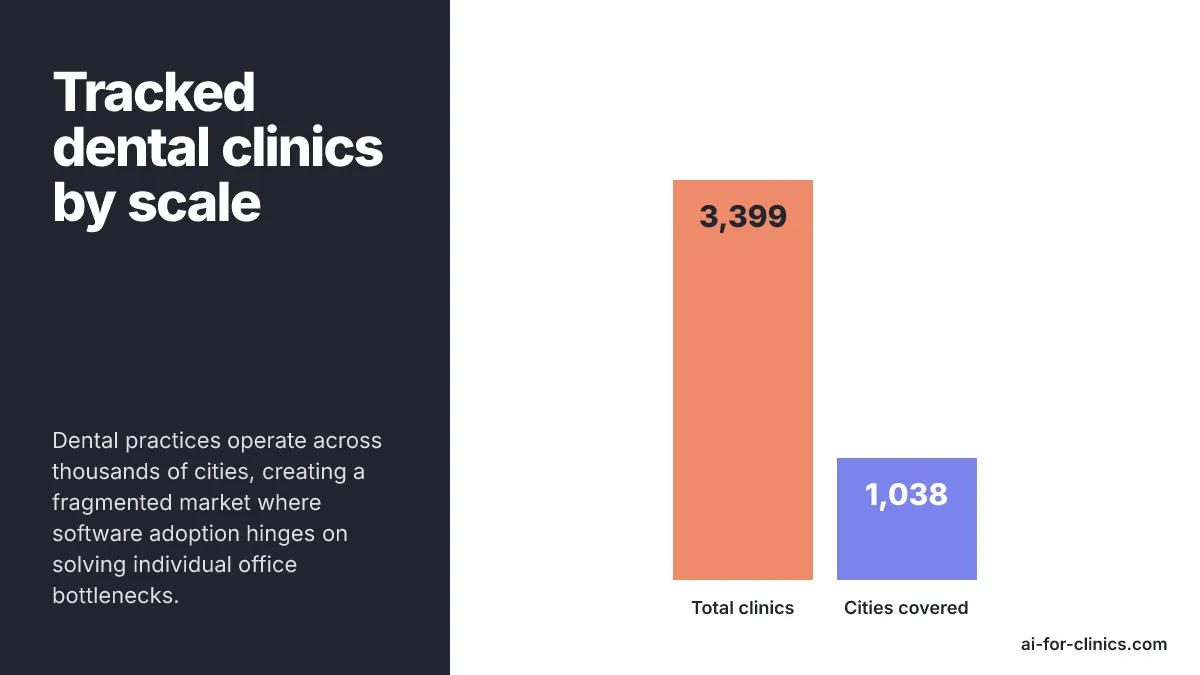
Those rounds tell you investors like the sector, though clinic operators still buy for their own back offices, not for a startup's balance sheet. We track 3,399 Dental clinics across 1,038 cities as of November 2026. That helps explain why venture funds want exposure here. An individual practice still lives or dies by whether the front desk runs cleanly every morning.
Four practical filters help clinic leadership judge a vendor before setting up a demo:
- Put the main operational problem into one sentence, and name whether the fire is charting speed, front-desk intake, radiograph review, or claim disputes.
- Check the current system of record so you know whether the software replaces the central database or sits on top as an add-on.
- Name the exact staff members, such as associate dentists, hygienists, scheduling staff, or billing coordinators, who have to change how they work each day.
- Set hard targets before rollout, like thirty-minute chart lockouts, zero lost calls, or a drop in initial claim rejections, so you can judge success later.
Software will not help someone whose real headache is business planning, partner disputes, or burnout. In those cases, DentMent dental education supplies direct practice-management instruction, experienced mentorship, and a peer community, which meets needs software vendors cannot touch. Founders in this category have to stay just as careful when talking with venture funds. Early-stage healthcare software teams can review fundraising readiness steps before they trust market hype, while venture investors can consult clinical AI diligence questions to separate defensible product depth from shallow sales demos.
Walk away from pitches that lean on generic algorithm talk without mapping the handoff between staff members. A good vendor meeting focuses on the current backlog, checks which clerk or assistant touches the file, audits the data connection, and agrees on a hard metric to review thirty days after the team starts using the system.
What to check before booking a vertical AI demo
Before you book another product pitch, track down the exact clerical snag that stole the most time out of yesterday. At dental practices, that usually means finding out if work stalled out while someone typed notes chairside, read scans, ran insurance approvals, or tried to track down overdue cleanings. Law firm partners need to check if unbilled revenue trickled away because prospective clients waited too long on intake questionnaires, or nobody picked up incoming rings during peak lunch hours.
Putting together a realistic shortlist takes hard homework, not reading homepage taglines. Pull your active database agreements out of filing cabinets. Figure out which front-desk receptionists or dental assistants will log into the program every morning, estimate how many afternoons of lost work onboarding will eat up, and pick one hard operational metric to decide if you keep or drop the software at the end of month one.
Purchasing a subscription never fixes sloppy operational habits. None of the AI startups reviewed here remove the work of reviewing security standards, locking down patient records, running staff training, or forcing managers to choose which daily headaches warrant an outright software change.
Frequently Asked Questions
What are the top US startups in vertical AI for dentists and lawyers?
The top US startups in vertical AI for dentists and lawyers include Archy and Oryx for dental practice management, Overjet for dental AI across groups, Smith.ai for law-firm intake, and Trust AI for future dental operating systems. These companies focus on specific professional needs, offering tailored solutions to improve workflows in their respective fields.
How does Archy benefit dental practices?
Archy benefits dental practices by uniting clinical charting, digital imaging, scheduling, billing, and patient messaging in a single cloud environment. This consolidated architecture eliminates the need for synchronizing separate vendor subscriptions, making it ideal for practice owners who want a unified platform. Archy's automation capabilities, such as Archy Scribe, help maintain accurate documentation during chairside exams, preventing billing discrepancies.
What makes Overjet suitable for dental groups?
Overjet is suitable for dental groups because it standardizes clinical reviews and assists diagnostic consistency across multiple locations. It simplifies payer claim audits and is particularly beneficial for dental support organizations, group practices, and insurance carriers. The company's algorithms, developed by MIT computer scientists and Harvard dentists, analyze dental radiographs and periodontal measurements against objective standards, ensuring reliable data models.
How does Smith.ai improve law-firm intake processes?
Smith.ai improves law-firm intake processes by providing a combination of artificial intelligence and human receptionist coverage tailored to individual legal practices. It ensures structured caller qualification, gathers case facts, and qualifies leads around the clock. This continuous client intake helps law firms avoid missed revenue opportunities and enhances lead conversion, which is crucial for acquiring new clients in competitive legal specialties.
What should new dental practices consider when choosing Oryx?
New dental practices should consider that Oryx offers a comprehensive startup package that includes cloud charting, insurance claims, imaging, and practice management tools. The software integrates AI features like voice notes and diagnostic assistance, helping new clinics establish efficient workflows from day one. However, choosing Oryx requires a serious commitment to infrastructure, as it involves staff training, patient data management, and workflow planning.
What is Trust AI building for dentists?
Trust AI, founded in San Francisco in 2025, says it is building a full operating environment for modern dental care, backed by a seed round the company announced. Offices that need a proven management system today should weigh that long-range ambition against the clinical bottleneck they have right now.
How should a clinic evaluate a vertical AI vendor before a demo?
A clinic should state its main operational problem in one sentence, check whether the software replaces the system of record or sits on top of it, name the staff who will change how they work, and set a hard success metric before rollout.
Related reading
- Why Startup Founders Demo to Non-Customers: A 2026 Guide
- How to Find a Technical Co-Founder for Clinic AI Startup
- Fundraising Readiness: Key Steps for Health-Tech Startups
- Investor Due Diligence Questions for Clinical AI Startups
- 6 Best Ways to Recruit Dentists for DSO Growth
- The 7 Best Healthcare SEO Agencies in 2026, Ranked by AI-Readiness and Patient-Acquisition Rigor
- 7 Clinical AI Services: Options Compared for 2026 Buyers
Sources
- Archy – Cloud-Based Dental Practice Management Software
- Overjet – About
- Smith.ai – 24/7 AI Receptionists & Live Human Agents
- Oryx – Dental Software for Startup Practices
- Trust AI – Dentistry's iPhone Moment press release
- Legora: raises $550M Series E at $8.8B valuation